Highland Croft Foundation
 |
Preserve and Promote the Unique Culture
and Heritage |









Highland Croft Foundation
|
|
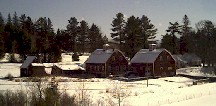
Highland Croft wants to preserve these wonderful structures in our midst and promote the North Country's unique culture
|
The following is from SUNY
School of Environment and Forestry American chestnut (Castanea dentate) Before the turn of the 20th century, the eastern half of the United States was dominated by the American chestnut. Because it could grow rapidly and attain huge sizes, the tree was often the outstanding visual feature in both urban and rural landscapes. The wood was used wherever strength and rot-resistance was needed. In colonial America, chestnut was a preferred species for log cabins, especially the bottom rot-prone foundation logs. Later posts, poles, flooring, and railroad ties were all made from chestnut lumber. Chestnut heartwood is legendary for its rot resistance. Logging of standing dead trees and then of the fallen logs took place for decades after the chestnut trees were killed. The edible nut was also a significant contributor to the rural economy. Hogs and cattle were often fattened for market by allowing them to forage in chestnut-dominated forests. Chestnut ripening coincided with the Thanksgiving-Christmas holiday season, and turn-of-the-century newspaper articles often showed train cars filled to overflowing with chestnuts rolling into major cities to be sold fresh or roasted. The American chestnut was truely a heritage tree. All of this began to change in the late 1800s with the introduction of Cryphonectria parasitica, the causal agent of chestnut blight. This disease reduced the American chestnut from its position as the dominant tree species in the eastern forest to little more than an early-succession-stage shrub. |
|
Website material copyright by Highland Croft Foundation © 2003. Web last updated 03/23/2013 . This web was made by Guardian Republic webmakers.
|
